 |
|
The SIA Fall Tour for 2004 in Wilmington, Delaware |
| Although settled in the 1630s by Swedish colonists, Wilmington’s industrial development did not begin until the 1730s when English Quaker merchants recognized its geographic advantages. The Brandywine River, tumbling out of the hills on the northeast side of the city, provided waterpower, and the slowly meandering Christina to the south offered a tidewater port, conveniently close to the wheatgrowing region of Lancaster and Chester counties, Pennsylvania. By the 1770s, the banks of the Brandywine were lined with flour mills annually grinding and exporting tens of thousands of barrels of “Brandywine Superfine.” Waterpowered mills (paper, lumber, textiles, gunpowder, spice, and snuff, in addition to flour) set the stage for Wilmington’s industrialization in the 19th century, yet the city’s merchants and mechanics were quick to invest their accumulated capital and turn their skills to steampower and railroads. Wilmington’s economic base shifted from railroad-car manufacturing, tanning, shipbuilding, and carriage making during the 19th century, to being the corporate headquarters of chemical giant DuPont in the 20th century, to banking and financial services in the 21st. Today, the honor of being Wilmington’s largest employer has passed from DuPont to bankcard company MBNA. This economically diversified metropolitan area retains active railroad repair shops (Amtrak and Delaware Car Co.), automobile assembly plants (GM and Chrysler), refineries (Sun Oil and Premcore), chemical plants (DuPont, Ciba), pharmaceuticals (AstraZeneca), poultry processing (Perdue), and even steel (ISG). Wilmington has avoided the declining fate of other medium-sized cities in the region. |
Further updated information will be posted here as it becomes available or contact our Mary Habstritt the SIA Events Coordinator. Recommended Reading
|
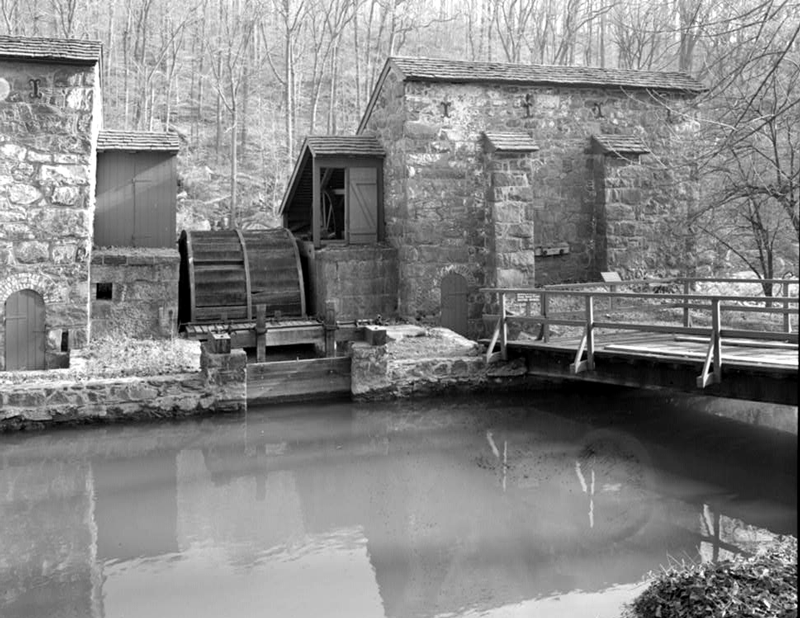
HABS, W. Gould White, photographer, March 30, 1936, View east showing west elevation, Dupont Powder Mill, Hagley Museum, on Brandywine River, Greenville vicinity, New Castle County, DE |
Web links of interest about Wilmington, DelawareWilmington Convention & Visitors Bureau Hagley Museum Slide show - Views of Hagley Musuem The Historical Society of Delaware DuPont Heritage in Willmington, Delaware |
SIA Home: http://www.sia-web.org or http://www.siahq.org